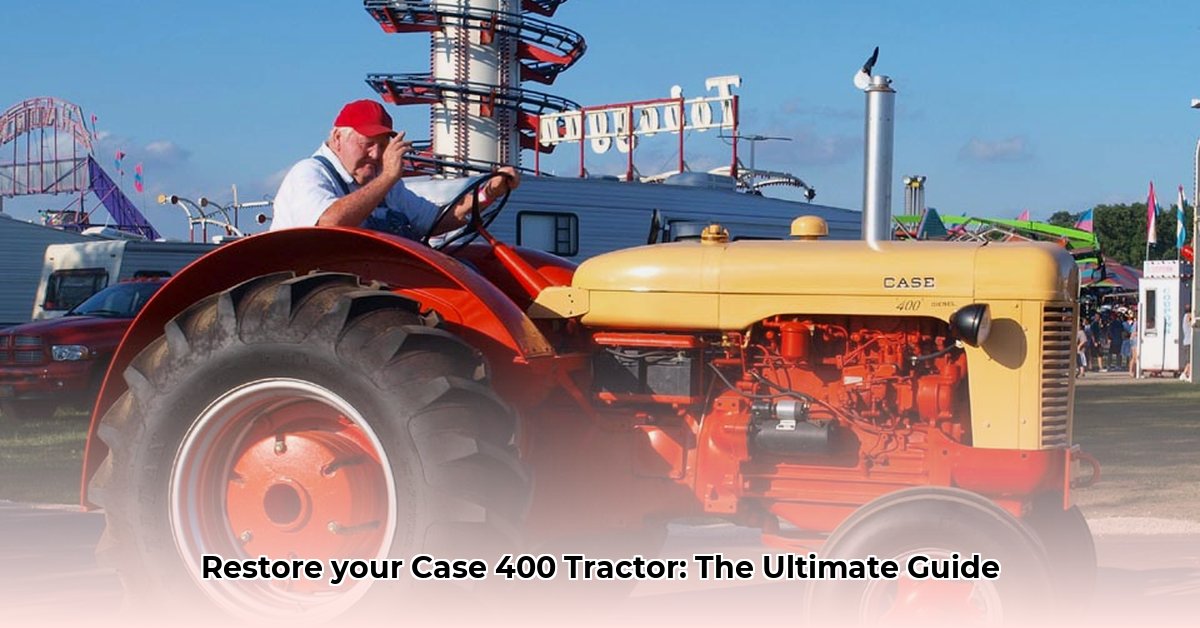
Welcome to the rewarding—and sometimes challenging—world of restoring a J.I. Case 400 tractor. This comprehensive guide provides a step-by-step approach for collectors, restoration enthusiasts, and anyone captivated by this iconic piece of agricultural history. From identifying a genuine Case 400 to performing advanced repairs, we'll equip you with the knowledge and resources to bring this classic workhorse back to its former glory. For further information on modern Case tractors, check out Case Technology.
Identifying Your Case 400: Authenticity Check
Before you begin your restoration journey, it's crucial to verify that you indeed own a genuine Case 400. This involves a multi-pronged approach combining visual inspection with meticulous record-keeping.
First, locate the model number plate. It's typically near the steering column, often partially concealed. Carefully clean the area to reveal the identifying number. Cross-reference this number with online databases and resources to confirm its authenticity. Remember, the serial number etched on the tractor is equally important for accurate parts identification and historical context.
Next, conduct a visual inspection, comparing the tractor's features against well-documented photographic examples found online. Key distinguishing characteristics include the curved hood, the sturdy construction, and the presence of the classic Case Eagle Hitch. Pay close attention to subtle details – these visual cues help differentiate a genuine Case 400 from similar models. Thorough photographic documentation at this initial stage will aid greatly in the restoration process.
Assessing Your Case 400: A Comprehensive Evaluation
A thorough assessment is the cornerstone of a successful restoration. This involves a detailed evaluation of the tractor's mechanical, cosmetic, and part completeness. Consider this your tractor's pre-restoration health check.
Begin with a visual survey, noting any dents, rust, damage, or missing components. Document everything—from faded paint to significant body damage—with photographs. This comprehensive record provides a baseline for your restoration project.
Next, delve into the mechanical aspects. Use the following checklist as your guide:
| Category | Item | Assessment |
|---|---|---|
| Mechanical | Engine | Compression test, oil leaks, starting difficulties |
| Transmission | Smooth shifting, unusual noises, resistance | |
| Hydraulic System | Lift arm function, leaks, responsiveness | |
| Electrical System | Battery condition, wiring integrity, light functionality | |
| Cosmetic | Bodywork | Rust, dents, scratches, missing panels, paint condition |
| Decals & Markings | Presence, condition | |
| Completeness | Missing Parts | Comprehensive inventory of missing components |
This detailed checklist will help in creating a realistic budget and timeline for your project. Remember to thoroughly document each finding; this detailed record becomes invaluable as the restoration progresses.
Sourcing Parts: Navigating the Supply Chain
Securing parts for a vintage Case 400 requires resourcefulness and persistence. Original parts are increasingly scarce, therefore, diversification in your search strategies is essential.
Start by exploring online marketplaces (eBay, specialized vintage tractor forums) and contacting dedicated Case tractor parts suppliers. Online forums and communities dedicated to Case 400 restoration are invaluable resources for both parts and advice; active participation significantly increases your chances of finding rare or specialized items.
Consider exploring reproduction parts, but carefully vet suppliers to ensure quality. When all else fails, and for unique or damaged components, custom fabrication or 3D printing may provide viable solutions. Don't underestimate the power of online communities – they frequently share tips and tricks for sourcing hard-to-find items.
Basic Maintenance & Repair: Essential Procedures
Before embarking on a full restoration, mastering some basic maintenance is crucial. These routine procedures keep your tractor operational and prolong its life. Remember that safety is paramount when working on any machinery, particularly vintage tractors. Always disconnect the battery before working on electrical components and wear appropriate safety gear (gloves, eye protection, sturdy footwear).
Prioritize these essential steps:
Oil Change: Follow the instructions in your owner's manual precisely, using the correct type and quantity of oil. This simple step significantly extends engine life.
Filter Replacements: Regularly replace air, fuel, and hydraulic filters. Using the correct filters is non-negotiable.
Troubleshooting: Address minor issues promptly. A methodical approach, checking fuel, air, and spark (where applicable), will dramatically improve diagnosis.
Remember, patience and systematic problem-solving are critical components of success.
Advanced Restoration: A Step-by-Step Guide
Undertaking a full restoration of a Case 400 is an ambitious undertaking; it requires significant time, meticulous attention to detail, and specialized skills. This process is best approached in a systematic, step-by-step fashion:
Disassembly: Carefully dismantle the tractor, meticulously documenting each step with photographs or detailed diagrams. This is crucial for reassembly.
Cleaning: Thoroughly clean each component using appropriate solvents and cleaning tools (wire brushes, etc.).
Repair & Rebuilding: Address any damage or wear; repair or replace parts as necessary. This is where your parts sourcing efforts pay off.
Reassembly: Carefully reassemble the tractor, adhering closely to the documentation created during disassembly.
Testing & Fine-tuning: Test all systems to ensure proper functionality. Adjustments may be required.
Safety Precautions: Prioritizing Personal Safety
Operating and restoring a vintage tractor demands the utmost caution. Remember, these machines lack many modern safety features.
- Always disconnect the battery before performing any electrical work.
- Wear appropriate safety gear (eye protection, gloves, sturdy footwear).
- Never operate the tractor without proper training and a thorough understanding of its operational characteristics.
- Be mindful of your surroundings. Vintage tractors can present unique hazards.
Prioritizing safety ensures a safe and successful restoration experience.
Conclusion: Embark on Your Restoration Journey
Restoring a J.I. Case 400 tractor is a rewarding and educational journey. While challenging, the process yields significant rewards – a functioning piece of agricultural heritage and a tangible link to a bygone era. This detailed guide provides a roadmap for your restoration project. Remember consistent documentation, resourcefulness in sourcing, and a steadfast commitment to safety will contribute to your success. Good luck, and enjoy the journey!